
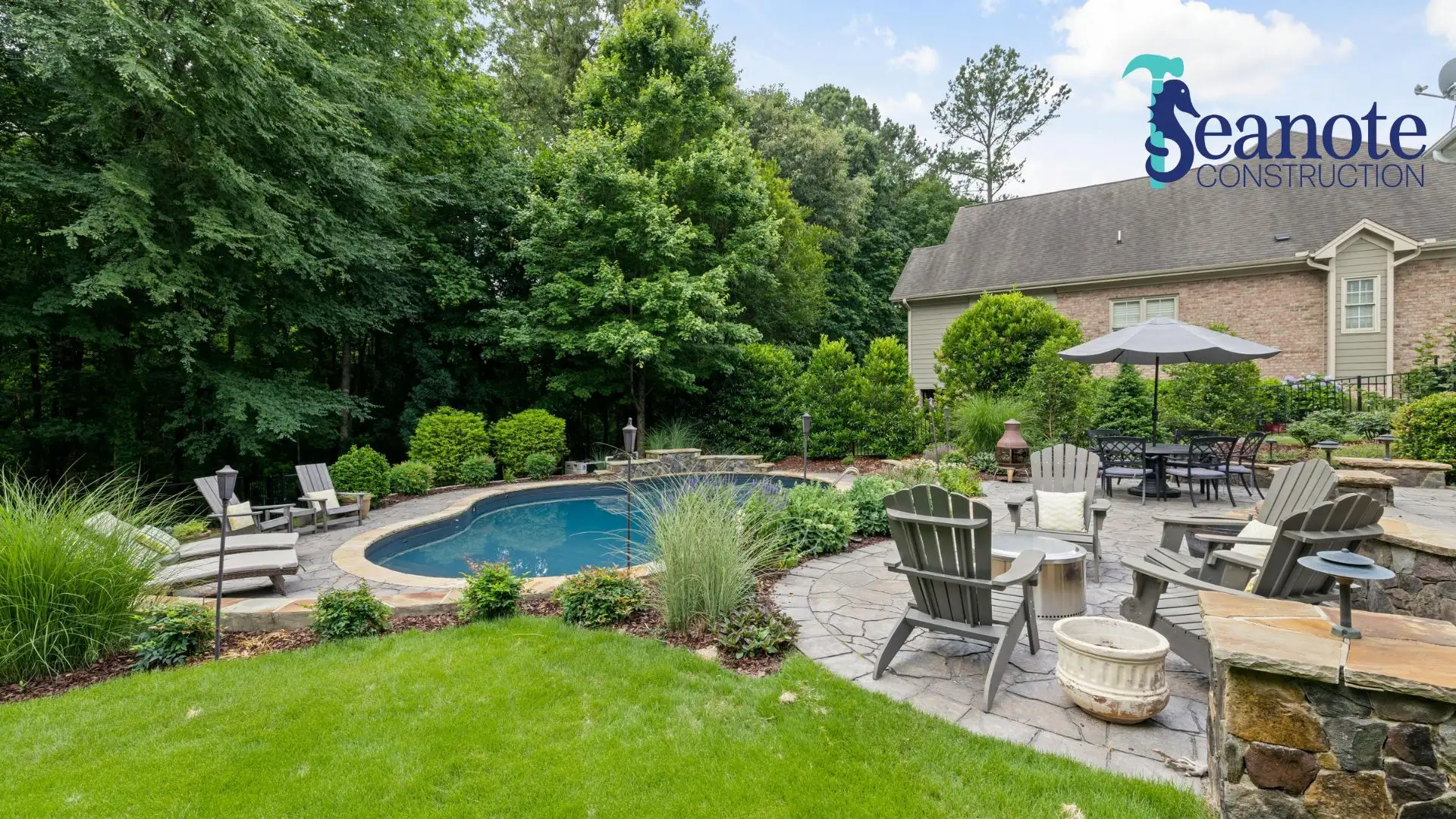
In Florida, between salt air, extreme heat, hurricane codes, insurance requirements, and material durability, the wrong upgrade can become expensive fast. A beautiful pool deck or outdoor kitchen can turn into a maintenance problem if it is not designed for Florida’s climate and local building rules.
The best exterior remodels balance appearance, code compliance, comfort, and long-term return. That means knowing when impact windows are worth the cost, which materials can survive salt and sun, how the 25% window replacement rule affects your budget, and which outdoor living upgrades add value instead of creating future repairs.
Seanote Construction helps Florida homeowners design and build exterior spaces that are made for real Florida conditions. Contact us to build a space that looks good, lasts longer, and avoids costly code surprises.
Key Takeaways
- Florida exterior remodels need to account for hurricane codes, salt air, heat, moisture, and insurance requirements before materials are selected.
- Impact windows, lanais, pool decks, and outdoor kitchens can add value, but only when they are built with Florida-ready materials and code-compliant planning.
- The wrong material choice can lead to high maintenance, failed inspections, lost insurance savings, or upgrades that do not hold up in Florida’s climate.
The Hidden Costs of Upgrading Windows and Doors
You will overspend if you ignore local building codes and focus only on the window’s price tag. Upgrading your exterior openings changes how your home handles wind, heat, and moisture. The decision comes down to upfront cash versus long-term insurance savings.
Why the Florida 25% Rule Controls Your Budget
Replacing more than 25% of your home’s windows forces you to bring the entire house up to current hurricane codes. Most homeowners do not know this rule exists. They try to save money by replacing a few large sliding doors. If those doors make up more than a quarter of the home’s total glazed area, the city inspector will fail the project.
You then have to replace every other window in the house.
The trade-off: Do a small project and stay strictly under the 25% limit, or rip the band-aid off. Upgrading the whole house hurts upfront, but it is the only way to trigger massive insurance discounts
.
Impact Windows vs. Shutters: The 5.8-Year ROI
Impact windows pay for themselves in exactly 5.8 years through insurance drops and energy savings. Shutters cost less today. But they require physical labor every time a storm enters the Gulf. This causes preparation fatigue.
Impact windows give you “always-on” protection. They also stop up to 40% of heat transfer into your home. More importantly, installing impact windows across your entire home cuts the wind portion of your homeowner’s insurance by 25% to 45%.
The limitation: Standard impact windows are not enough if you live in a High-Velocity Hurricane Zone (HVHZ) like Broward or Miami-Dade. In these areas, you must buy windows with a specific Notice of Acceptance (NOA) for large-missile tests. Standard impact glass will fail the inspection.
Building a Lanai That Survives Salt, Sun, and Heat
A functional Florida lanai requires materials that resist salt pitting and stay cool under a baking sun. Aesthetic design boards sell a lie. You cannot just pick what looks good on a screen. You must choose materials based on barefoot comfort and salt resistance.
The Travertine Trap and Why Natural Stone Fails
Natural travertine pits, cracks, and degrades when exposed to Florida’s coastal salt air. It looks high-end. It stays exceptionally cool on bare feet. Because of this, builders push it constantly.
But travertine demands aggressive, routine sealing. Without it, the salt eats the stone.
The trade-off: You get excellent barefoot comfort, but you sign up for heavy, expensive maintenance. If you skip the sealing, your expensive pool deck will look ruined in three years.
Porcelain Tile: The Secret Winner for Pool Decks
Porcelain tile resists UV damage, repels salt, and requires almost zero maintenance. It is the smartest choice for Florida outdoor spaces. It does not pit. It does not fade.
The trade-off: Dark porcelain gets dangerously hot. You must select light colors or matte wood-look finishes. If you choose a dark gray porcelain tile for an unshaded pool deck, you will not be able to walk on it in July.
Understanding Outdoor Kitchens and Living Spaces
Connecting your indoor and outdoor living spaces requires weather-tight engineering, not just a good layout. Seamless transitions are great until water breaches the track of your sliding door.
Decking Materials
Composite decking is favored by 46% of industry builders for outdoor living expansions, but it holds heat. It will not splinter, rot, or require staining like natural wood. It survives the humidity.
The limitation: Composite boards act like a heat sink. In direct Florida sunlight, they become too hot for bare feet or pets. You must reserve composite decking for shaded areas or covered lanais. Use light-colored stone or porcelain for fully exposed spaces.
Indoor-Outdoor Integration
Pocket sliding doors seamlessly merge your living room with your lanai, but they require major structural reinforcement. You cannot just cut a wider hole in your wall. The header above the door must bear the roof load and withstand severe wind pressure.
Upgrading to pocket sliders often requires custom engineering, which adds significant cost and time to the project.
Next Steps for Your Florida Remodel
Your exterior remodel should lower your insurance, survive the salt air, and require minimal upkeep. Do not guess on materials. Do not get caught off guard by the 25% rule.
Seanote Construction designs and builds spaces based on Florida’s harsh realities. Operating across Gainesville, Ocala, The Villages, and Orlando, we balance strict building codes with the way you actually want to live.
Make decisions based on data, not just design boards. Choose materials that work for your zip code. Get your wind mitigation credits. Build a space you can actually use.