
Florida construction prices are likely to stay under pressure in 2026, especially for projects tied to steel, aluminum, fuel-heavy deliveries, and materials affected by global supply delays.
AGC reported that aluminum mill shapes rose 39.1% and steel mill products rose 20.9% from February 2025 to February 2026, showing how quickly material costs can change when fuel, metals, and shipping become unstable.
For Gainesville and North Central Florida homeowners, that means project planning matters more than guessing the “right time” to build. A kitchen remodel, bathroom renovation, addition, aging-in-place upgrade, or custom home needs a clear scope, realistic pricing, and room for material changes before work begins.
Seanote Construction helps homeowners make those decisions with calm communication, transparent pricing, and organized project management.
For more detailed information about current building costs in Florida, check out our 2026 building cost calculator.
Are Construction Prices in Florida Going Up After the Iran War?
Florida construction prices are likely to stay elevated in 2026, especially for projects that depend on steel, aluminum, copper, diesel-heavy deliveries, or long-lead materials.
For Gainesville and North Central Florida homeowners, this does not mean every project will jump by the same amount. A bathroom remodel, kitchen renovation, home addition, custom home, and commercial buildout all use different materials and labor. The risk depends on the scope, timing, and how early the project team can lock in key decisions.
The conflict adds another layer of uncertainty because construction is tied to fuel, freight, metals, and global shipping. When fuel prices rise, suppliers often pay more to move materials. When metals rise, projects using structural steel, aluminum windows, railings, electrical systems, or commercial components can feel the change sooner.
How Does the Iran War Affect Construction Material Costs
The Iran War affects construction material costs by raising risk around oil, freight, metals, delivery timing, and contract pricing. Florida homeowners may not see the conflict directly, but they can feel it when suppliers adjust prices for diesel, shipping, aluminum, steel, copper, and long-lead building materials.
The biggest link is fuel. The U.S. Energy Information Administration reported that oil flow through the Strait averaged 20 million barrels per day in 2024, equal to about 20% of global petroleum liquids consumption.
That matters for construction because fuel touches almost every jobsite cost. Diesel affects trucking, equipment, supplier deliveries, dumpster hauling, concrete deliveries, and the cost of moving materials from ports, warehouses, and distributors to a project site.
Here is the cost chain:
- Conflict raises risk around oil and shipping.
- Oil risk raises diesel, freight, and delivery costs.
- Energy and supply pressure raise metal prices.
- Suppliers shorten quote windows or add price cushions.
- Contractors update estimates to account for material, labor, and schedule risk.
- Homeowners see higher or less predictable project pricing.
Which Construction Materials Are Most at Risk in 2026
Steel, aluminum, copper, diesel-linked deliveries, and some concrete products carry the highest construction price risk in 2026. These materials affect more than large commercial jobs. They can also show up in Gainesville remodeling projects through electrical work, plumbing, structural changes, and custom home details.
| Material or Cost Area | 2026 Risk Level | Why It Matters for Gainesville Projects |
| Aluminum | High | Aluminum is common in windows, doors, railings, screened enclosures, trim, storefront systems, and exterior components. A price increase can affect both remodeling and commercial buildouts. |
| Steel | High | Steel affects structural supports, beams, rebar, fasteners, framing parts, and commercial construction. Home additions with structural changes can feel this more than simple cosmetic updates. |
| Copper | High | Copper is tied to electrical wiring, plumbing, HVAC components, and specialty systems. Kitchen remodels, bathroom remodels, additions, and older-home upgrades often need copper-related work. |
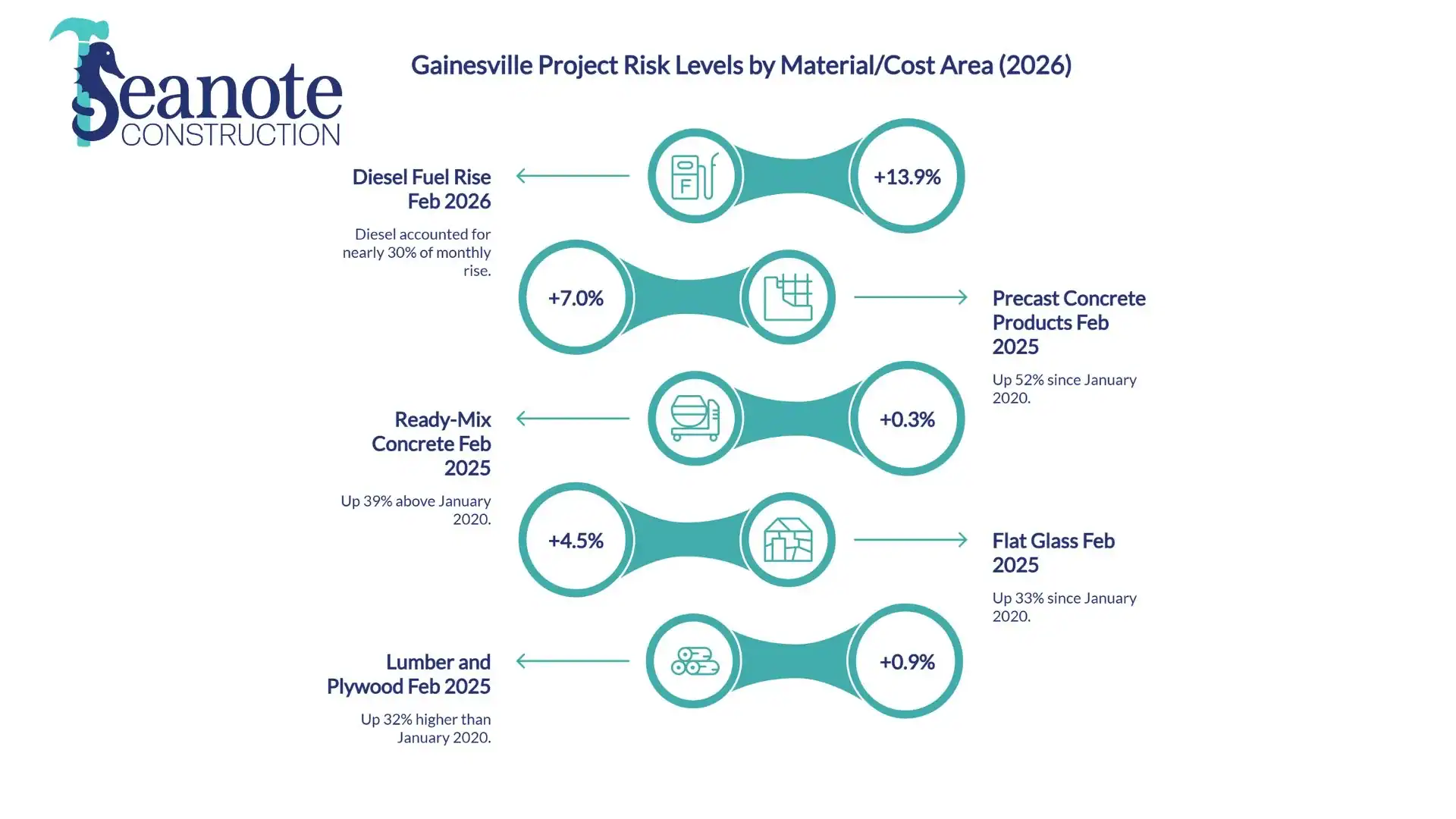
| Diesel and freight | High | Diesel affects trucking, equipment, delivery fees, dumpster hauling, supplier pricing, and jobsite logistics. BLS reported that diesel fuel rose 13.9% in February 2026 and accounted for nearly 30% of the monthly rise in processed goods for intermediate demand. |
| Precast concrete products | Medium to high | Precast concrete products were up 7.0% from February 2025 and 52% since January 2020. This matters for structural work, site improvements, and some commercial projects. |
| Ready-mix concrete | Medium | Ready-mix concrete was almost flat year over year, up 0.3% from February 2025, but still 39% above January 2020. That means foundation, slab, driveway, and addition costs may remain high even without a new spike. |
| Flat glass | Medium | Flat glass was up 4.5% from February 2025 and 33% since January 2020. Window replacement, exterior updates, additions, and energy-efficiency improvements can be affected. |
| Lumber and plywood | Medium | Lumber and plywood were only up 0.9% from February 2025, but still 32% higher than January 2020. Framing, repairs, additions, and cabinet-related work still need careful pricing. |
| Insulation, gypsum, and plastics | Lower short-term risk, higher long-term cost base | These categories showed small or negative year-over-year movement in February 2026, but each remained far above January 2020 levels. That matters when pricing full-home renovations instead of single-room updates. |
This is where early decisions help. Choosing windows, doors, fixtures, cabinets, tile, and specialty materials before construction starts gives the contractor better pricing information. It also gives the homeowner a cleaner budget before the project moves from planning to building.
What Do 2026 Construction Prices Mean for Gainesville Homeowners
Gainesville homeowners should plan for steady construction costs in 2026, not a quick return to pre-2020 pricing. North Central Florida may not carry the same coastal cost pressure as Miami-Dade, Broward, Naples, or the Keys, but local projects still depend on materials, labor, delivery timing, permits, and Florida Building Code requirements.
Gainesville projects also need to be planned with Florida weather and code requirements in mind. The 8th Edition 2023 Florida Building Code references ASCE 7-22, and Florida’s wind-load updates include wind speed maps, roof pressure rules, elevated building criteria, and tornado load criteria.
For a homeowner, the biggest question is not only “What is the price?” The better question is “What is included in this price?”
A useful 2026 Gainesville construction estimate should make these items clear:
- Scope of work
- Material allowances
- Labor assumptions
- Permit assumptions
- Window and door selections
- Structural, plumbing, electrical, and HVAC work
- Delivery timing
- Long-lead materials
- Change order process
- Quote expiration date
- Contingency recommendation
Seanote Construction fits this planning need because the company works across North Central Florida and offers residential and commercial services.
How Much Could Florida Construction Costs Change in 2026
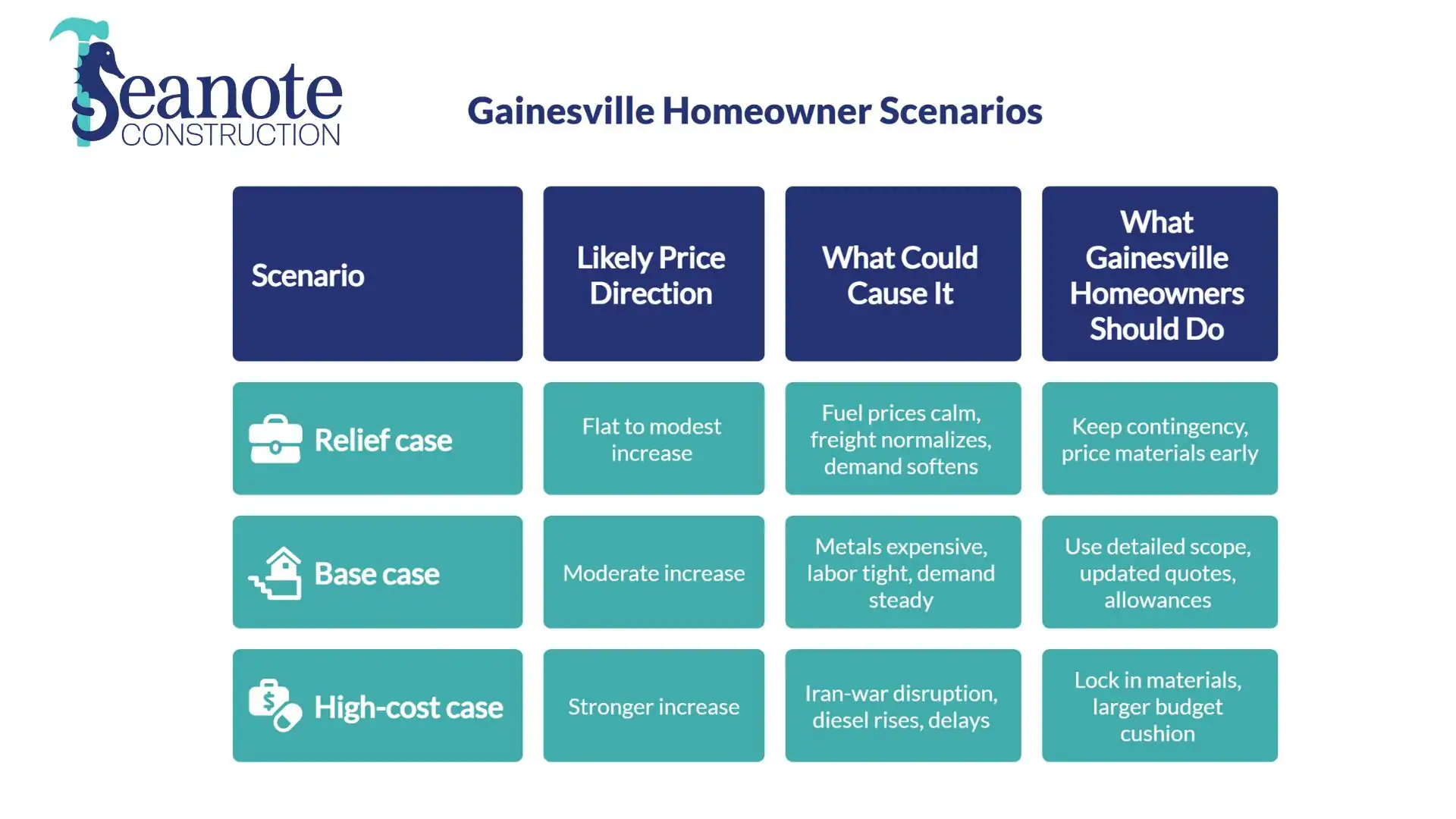
Florida construction costs could stay flat in the best case, rise moderately in the base case, or climb faster if fuel, freight, and metal prices stay unstable. No reliable source can promise one exact 2026 price change for every Gainesville project can use different materials and labor.
Florida’s construction market also has some signs of balance. Finfrock’s 2026 Florida construction outlook notes more stabilization in overall construction activity and a more competitive subcontractor market, which may improve pricing conditions as 2026 moves forward.
A safer way to budget is to separate the project into three cost groups:
- Known costs: labor already scoped, selected materials, permit assumptions, demolition, and basic installation work.
- Variable costs: cabinets, tile, fixtures, windows, doors, specialty metals, lighting, and long-lead products.
- Risk costs: freight changes, supplier quote changes, change orders, hidden damage, structural issues, and schedule delays.
This is why a single square-foot price can be misleading. Two Gainesville homeowners can both plan a 300-square-foot addition and get very different prices if one project needs structural tie-ins, upgraded windows, plumbing changes, electrical panel work, or custom finishes.
Why Are Labor Costs Still a Big Part of Florida Construction Pricing?
Labor costs remain a major part of Florida construction pricing because skilled trades are still hard to schedule, even when some material prices calm down. A project can have stable lumber or concrete pricing and still cost more if electricians, plumbers, framers, drywall crews, cabinet installers, or finish carpenters are booked out.
According to Associated Builders and Contractors, the U.S. construction industry needs an estimated 349,000 net new workers in 2026 to meet demand, with another 456,000 workers needed in 2027. ABC also estimates that every $1 billion in added construction spending creates demand for about 3,450 construction jobs.
That labor pressure matters in Gainesville because a remodel depends on several trades showing up in the right order. A kitchen remodel may need demolition, framing, plumbing, electrical, drywall, cabinets, countertops, tile, painting, and final inspections. If one trade is delayed, the whole schedule can shift.
For homeowners, labor pressure can show up in several ways:
- Longer wait times before a project starts
- Higher subcontractor bids
- Shorter quote windows
- Higher costs for niche work
- More scheduling pressure during busy seasons
- Higher costs for rushed or poorly planned projects
Should Gainesville Homeowners Build or Remodel Now or Wait?
Gainesville homeowners should start planning now if the project affects safety, accessibility, daily comfort, or property protection.
The reason is simple: waiting does not remove price risk. It changes the type of risk. Material prices could calm down, but labor, freight, permit timing, and supplier quotes could still move.
Here is a practical way to decide:
| Homeowner Situation | Better Move | Why It Makes Sense |
| A bathroom needs safety or accessibility updates | Plan now | A safer shower, wider access, grab bar backing, and better layout can reduce daily risk. |
| A kitchen works but feels outdated | Price the project now and compare options | Cabinets, appliances, counters, lighting, and layout choices can be adjusted before construction. |
| A home addition is needed for family space | Start planning early | Additions need scope development, design, structural review, permits, materials, and trade scheduling. |
| A custom home is being considered | Build the budget before deciding | The right answer depends on land, design, materials, labor, site work, and financing. |
| A project is mostly cosmetic | Consider phasing | Paint, fixtures, hardware, and smaller updates can often be scheduled around budget comfort. |
| Fire, water, or storm damage needs repair | Do not wait without a plan | Damage can create hidden cost and safety issues if the work is delayed too long. |
Seanote Construction is useful in this stage because the team can help Gainesville and North Central Florida homeowners talk through the project before they commit. A clear conversation about scope, timing, allowances, and possible price changes gives homeowners a better way to decide whether 2026 is the right year to move forward.
How Can Homeowners Protect Their Budget From Price Swings
Use these steps before signing a construction agreement:
- Define the full scope of work.
- Separate fixed costs from allowances.
- Ask how long each quote is valid.
- Choose long-lead materials early.
- Keep a realistic contingency.
- Review the change order process.
- Ask how material substitutions are handled.
- Work with a contractor who communicates before problems grow.
Why Does Contractor Communication Matter More When Prices Are Volatile?
Contractor communication matters more when prices are volatile because homeowners need to know what changed, why it changed, and what choices they have before the budget is affected. A price change is stressful. A late or unclear explanation makes it worse.
A reliable contractor should explain:
- Which parts of the estimate are fixed
- Which items are allowances
- How long supplier quotes are valid
- Which materials need early approval
- What happens if a product is delayed
- How change orders are priced
- How schedule changes are shared
- Who the homeowner should contact with questions
This is one reason Seanote Construction’s review themes fit the 2026 pricing problem so well. Clients often point to communication, follow-through, punctuality, and respect as reasons they trusted the team.
One client said, “Communication is top notch.” Another said Seanote “kept us informed every step of the way.” Those comments matter because construction stress often comes from silence, not only cost.
Plan Your 2026 Project With Clear Pricing and a Team That Communicates
Construction prices may keep shifting in 2026, but your project does not have to feel uncertain. The right plan can show where costs are most likely to change, which materials need early decisions, and how to build a budget that does not fall apart halfway through the job.
Seanote Construction helps Gainesville and North Central Florida homeowners move from questions to a clear project plan.
Talk through your project with Seanote Construction through the contact page and get clear next steps before you commit to a major investment.